
Firefly | Mobile Game App Design
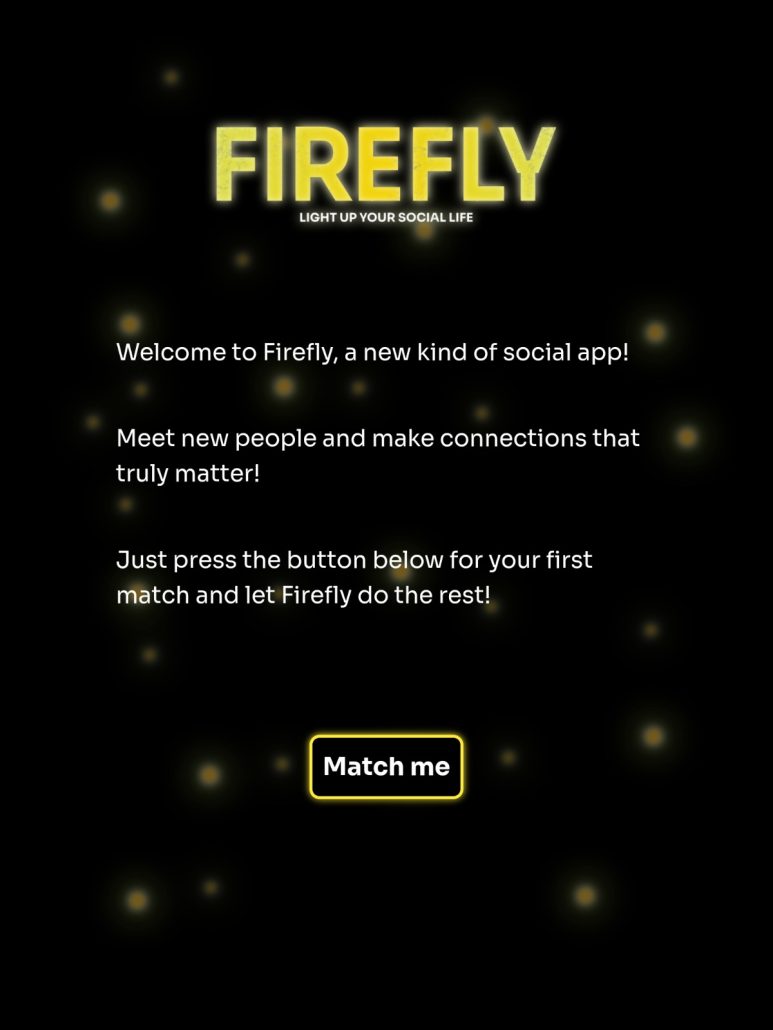
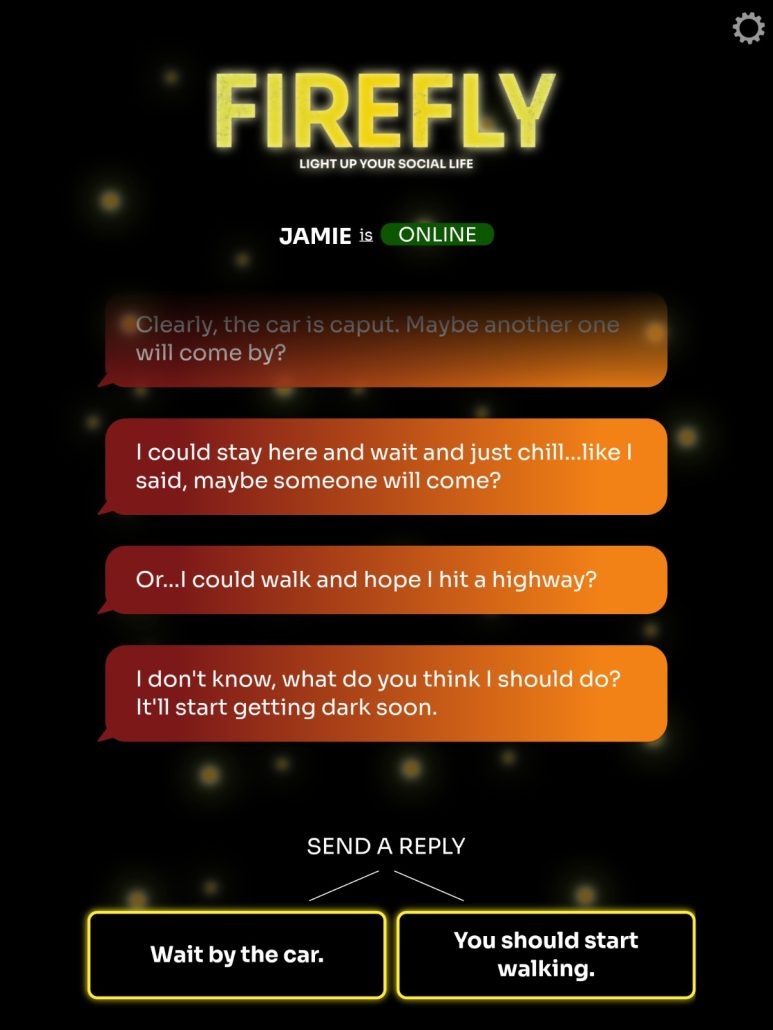
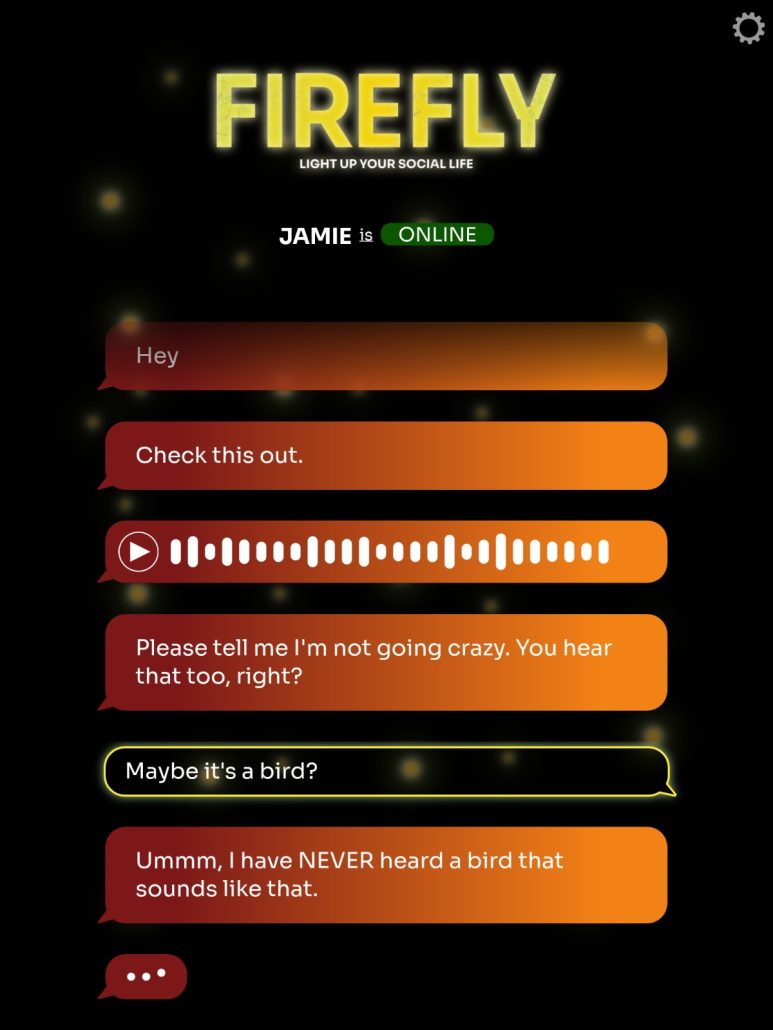
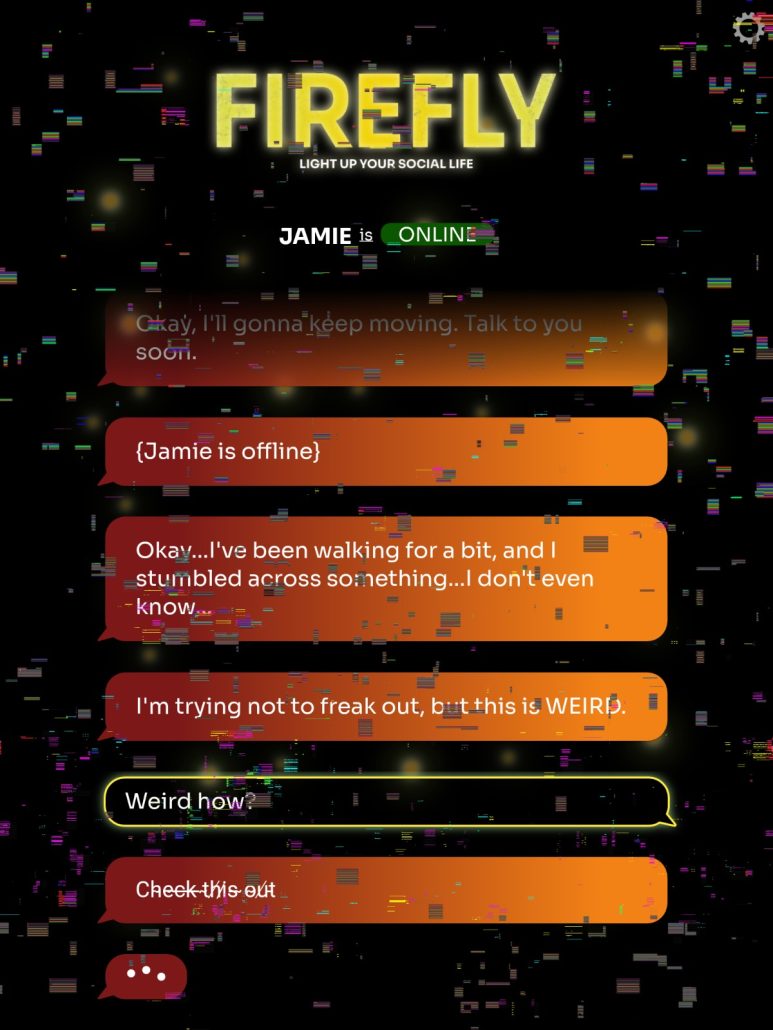
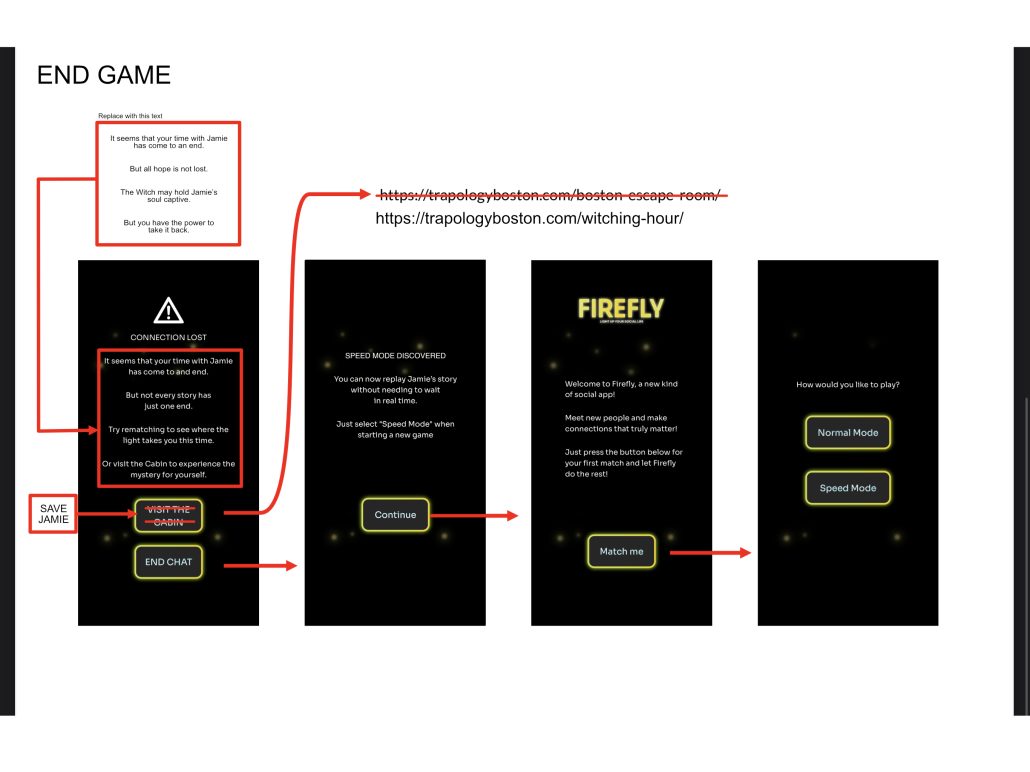
We built a prequel game that lives on your phone and sets up the in-person Witching Hour experience. You communicate in real-time with Jamie as they navigate the increasingly treacherous woods of the Bridgewater Triangle, making decisions that actually matter.
This isn’t a game that ignores your phone experience and starts fresh when you arrive at our venue. It’s a narrative that begins before you ever step into a room. You’ve already been invested in Jamie’s survival for days. You’ve already made choices that changed the story.
By the time you walk into Witching Hour, the stakes aren’t theoretical. They’re personal because you helped create them. That’s what happens when you design across platforms instead of treating them as separate experiences.
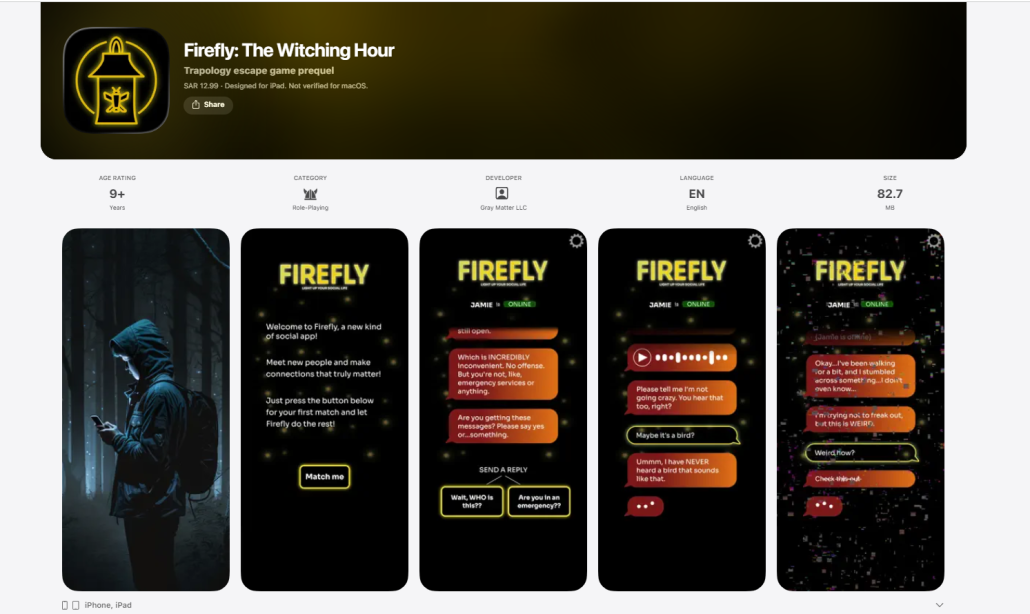
Planning and Design
The hardest part of building Firefly wasn’t the code or the narrative branching or even getting players to download a game before they arrived at our venue. It was making people genuinely care about Jamie through a phone screen. You can’t use atmosphere or physical presence or the immersion of being locked in a room. You’ve got text messages and player choices. That’s it. We had to write dialogue that felt urgent without being melodramatic, stakes that felt real without being manufactured, and character moments that made people want to save someone they’d never actually met.
Then we had to time everything so players could complete the mobile narrative on their own schedule but arrive at Witching Hour emotionally invested in an outcome they’d personally influenced. The technical coordination was brutal: tracking player choices, syncing timelines, making sure the in-person experience acknowledged decisions people had made days earlier on their phones.
We tested extensively because if the narrative disconnection was off by even a few hours, the whole emotional arc fell apart. When we watched the first group arrive at Witching Hour after completing Firefly and immediately recognize Jamie from their text exchanges, when they made decisions in the physical room based on relationships they’d built through a screen, that’s when we realized we’d figured out something genuinely new: narrative that doesn’t respect the boundary between digital and physical.
Hodfords
Our Impacts
We Pioneered Narrative Continuity Across Platforms
Firefly proved that a story can begin on someone’s phone and genuinely matter when they arrive at your physical location. We didn’t just build a mobile game as a teasers. We built narrative infrastructure that connected digital and physical experiences in a way most companies don’t even attempt.
We’re Available on Both Major App Stores
Firefly launched on Apple App Store and Google Play for $2.99. That’s not a side project. That’s a legitimate commercial product with distribution infrastructure. We didn’t build something internal. We built something marketable.
User Reviews Show Genuine Emotional Investment
App Store reviews from players specifically mentioned “it felt like I actually was interacting with someone real which made the experience feel scarier/nerve wracking (especially at night)” and “Felt like I was chatting with a real pal in the end. I could really feel Jamie’s voice in my head.” That’s not just positive feedback. That’s proof the mechanics worked emotionally. MortyMorty
We Successfully Drove Bookings for Witching Hour
Players explicitly stated in reviews “Cant wait for the actual escape room at Trapology Boston!” The app wasn’t just entertainment. It was a conversion tool that created genuine anticipation for the paid experience. Morty
We Engineered Real-Time Mechanics Successfully
The app uses real-time messaging where Jamie goes offline for indeterminate amounts of time, creating genuine tension and emotional stakes. That pacing mechanic is deliberately designed to create unease. It works.
We Partnered with Professional App Development Studios
We worked with Hodfords, a digital solutions company, to build this professionally. This isn’t a DIY app. It’s a polished, commercially-viable product with design and technical rigor behind it.
We Created a Prequel Model That Works
The concept of using a mobile app as a narrative prequel that sets up a physical experience is rare. Most companies treat mobile and physical as separate ecosystems. We proved they can work together strategically.
We Generated Platform-Agnostic Storytelling
Players who completed Firefly arrived at Witching Hour with emotional baggage about Jamie. They cared about a character they’d never actually met. That’s powerful narrative design that transcends the medium.